
I Tested a 10-Minute Shopify 3D Pilot Before Buying More Product Media
Every product-media idea sounds reasonable in a planning meeting. The expensive part is deciding whether it deserves a place in the operating system.
That was my question with Shopify 3D. I did not want to turn a whole catalog into a photogrammetry project because interactive product media looked impressive in a demo. I wanted one small test that could tell me whether shoppers would actually use it—and whether the workflow was realistic for a lean team.
So I set a deliberately narrow constraint: one SKU, one capture session, one product page, and one decision after the pilot. Supra 3D Capture was a good fit for that experiment because it turns guided phone photos into a web-ready GLB and can publish the model into Shopify product media or an Online Store 2.0 app block.
The headline number is useful: the app says a capture can take about ten minutes start to finish. But the more useful question is what that ten minutes buys you. Here is the framework I used.
My Pilot Was Designed to Answer One Question
I was not trying to prove that 3D will lift conversion for every category. I was trying to reduce uncertainty before asking the team to create more media. A successful pilot had to show three things:
- The product could be captured cleanly with our normal phone-and-lighting setup.
- The model made the item easier to inspect than the existing gallery alone.
- We could measure a shopper signal worth paying attention to before expanding the process.
That distinction kept the project honest. “It looks cool” is feedback. It is not an operating decision.
Pick the SKU With the Best Learning Value
The first SKU should not necessarily be the bestseller. I looked for an item where shape, material, depth, or scale matters to the purchase decision—while avoiding the truly difficult edge cases for a first test. Highly reflective, transparent, or fuzzy surfaces may deserve their own capture plan.
I scored candidates on four practical criteria: enough traffic to observe behavior, a shape that static photos flatten, a manageable capture surface, and a product owner who could review the page quickly. A structured first-SKU selection makes the experiment much cleaner than simply choosing whatever is on a desk. My earlier notes on picking a first Shopify 3D SKU use the same principle: optimize for learning, not novelty.
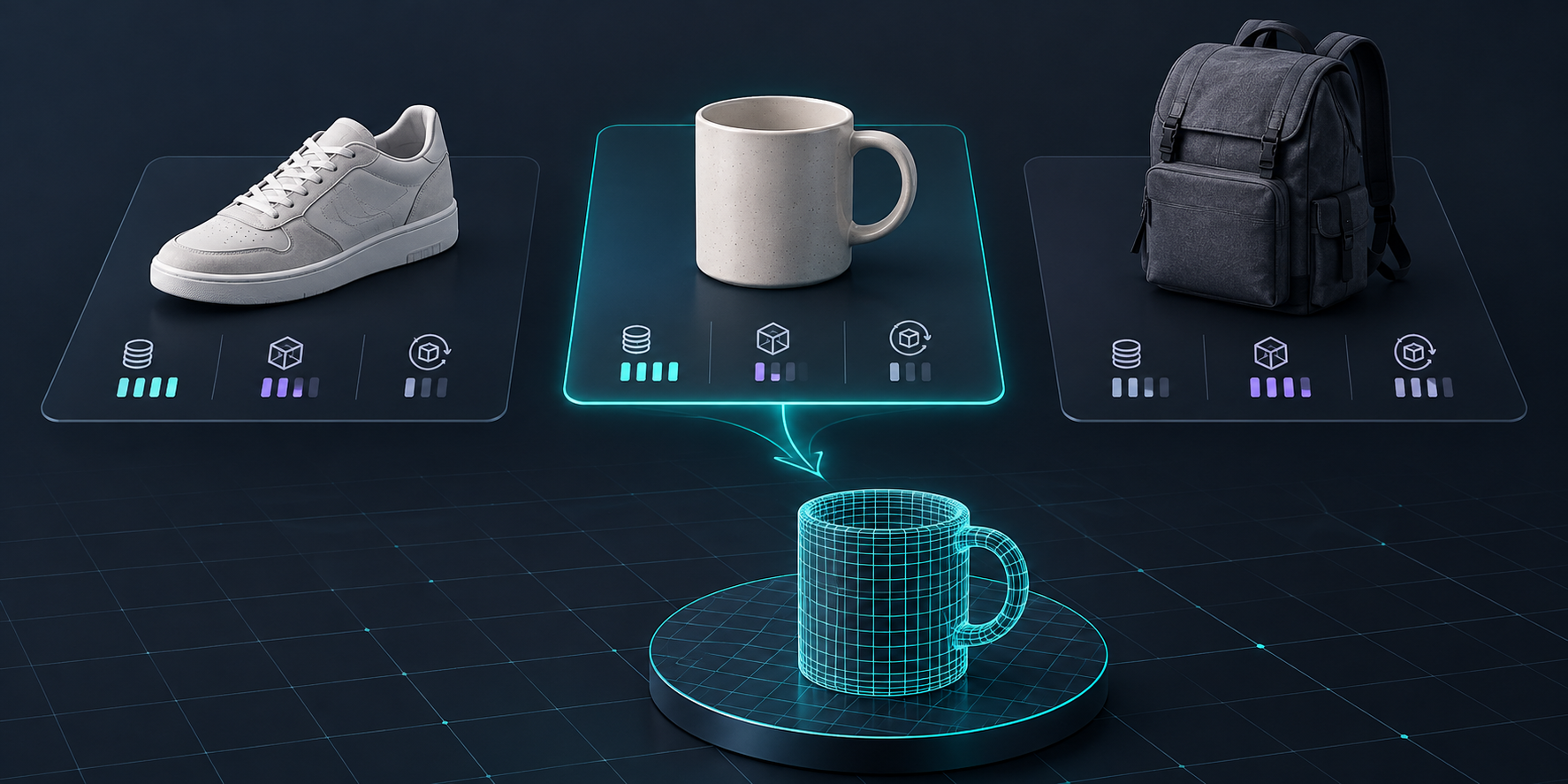
For a pilot, I would favor a shoe, bag, pottery, home object, or textured accessory over a flat commodity. The shopper should have a real reason to rotate it. If the object is completely explained by one front-facing photo, 3D may still be beautiful—but it is less likely to give you a decisive test.
Capture Like an Operator, Not a 3D Artist
This was the part I expected to be difficult. It was actually where the bounded pilot helped most. Supra 3D Capture’s workflow is straightforward: orbit a well-lit product with guided phone shots, let the service process the photos, then publish the resulting GLB. The public plan starts with three scans per month, which is plenty of room for a careful first pass rather than a frantic catalog sprint.
My practical rule: preserve the original photo set and write down what changed between attempts. If one model needs another pass, I want to know whether the variable was lighting, distance, background, or the object itself. This is the same reason I audit a Shopify 3D model before it reaches the product page: a model can be technically present and still fail to show the buyer the details that matter.
I also set a stop condition. If the first model required specialist lighting, hours of cleanup, or an unexplained workaround, that was a finding—not a reason to hide the cost. A pilot is valuable precisely because it exposes friction before the process becomes policy.
Treat the Product Page as the Actual Test
A GLB sitting in a media library is not a result. I attached the model to the Shopify product so the theme’s native 3D viewer could do its job, then checked it where customers would: on a desktop browser and on a phone. The app can also place a model through an Online Store 2.0 app block, which is useful if the product page needs an intentional “inspect in 3D” moment rather than another gallery item.
My review checklist was short:
- Can I rotate and zoom the object without losing the product’s proportions?
- Does the model expose a useful angle, material detail, or silhouette that the photos do not?
- Does it appear naturally beside the existing photos, price, options, and purchase action?
- Does mobile still feel responsive and understandable?
- Does the page explain the decision better, or did I just add another thing to interact with?
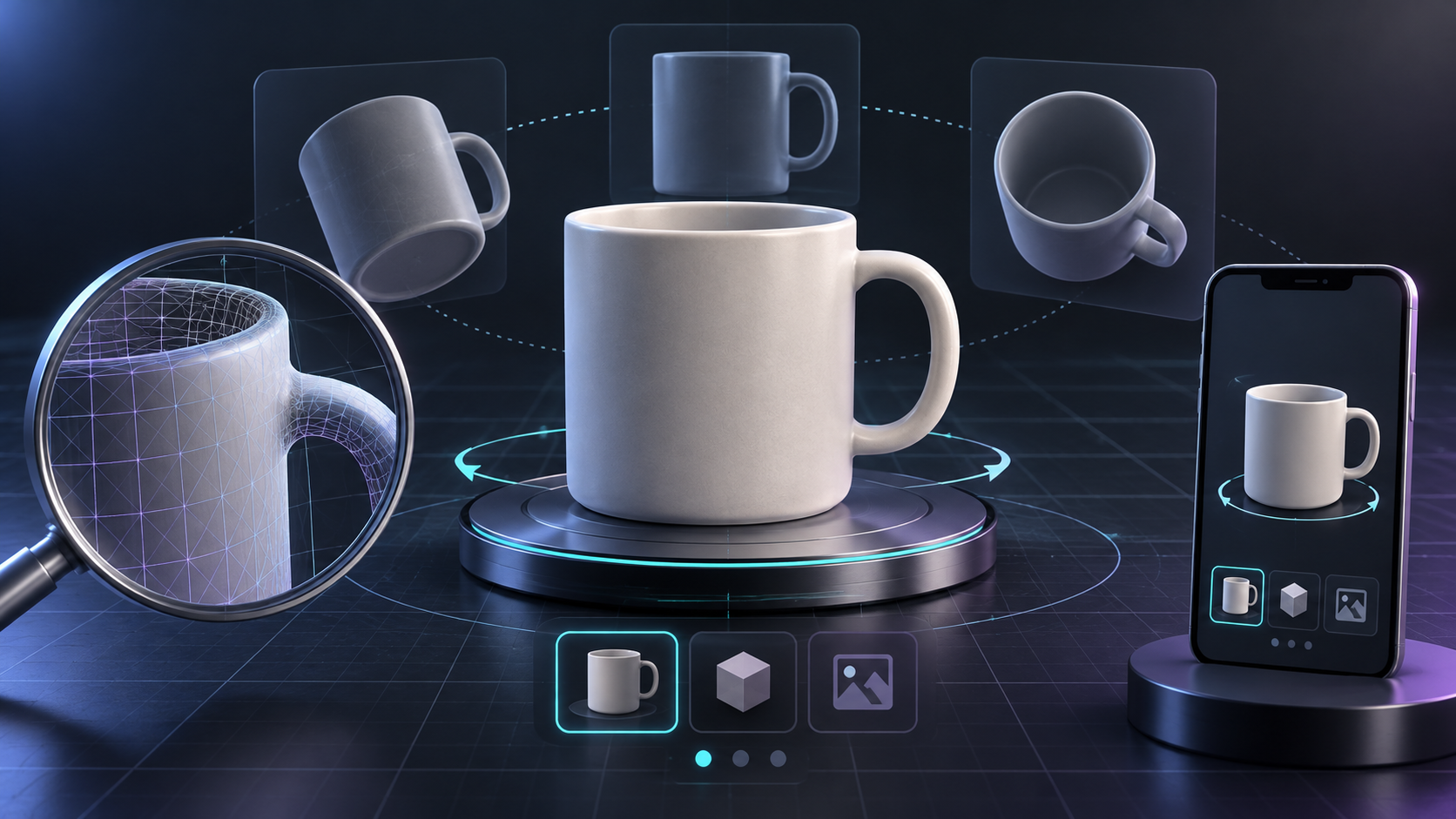
That last question matters. I do not use 3D to replace good product-page information. A model works best next to the right size guidance, material details, photos, and answers to common objections. If you are reworking the surrounding content too, planning Shopify tabs around shopper decisions is a useful companion exercise.
Measure Signals Before You Promise ROI
For a small pilot, I avoided pretending I could immediately prove a conversion lift. Instead, I chose a few observable signals: interaction with the model, product-page engagement relative to a comparable SKU, support questions about shape or material, and return-reason language for that product family.
Those are not interchangeable metrics. A product can earn lots of rotations and still create no commercial value. Conversely, a model that gets modest use but resolves a recurring “What does it look like from the side?” question may be highly useful. I reviewed the signals together, plus the production time required for the next capture.
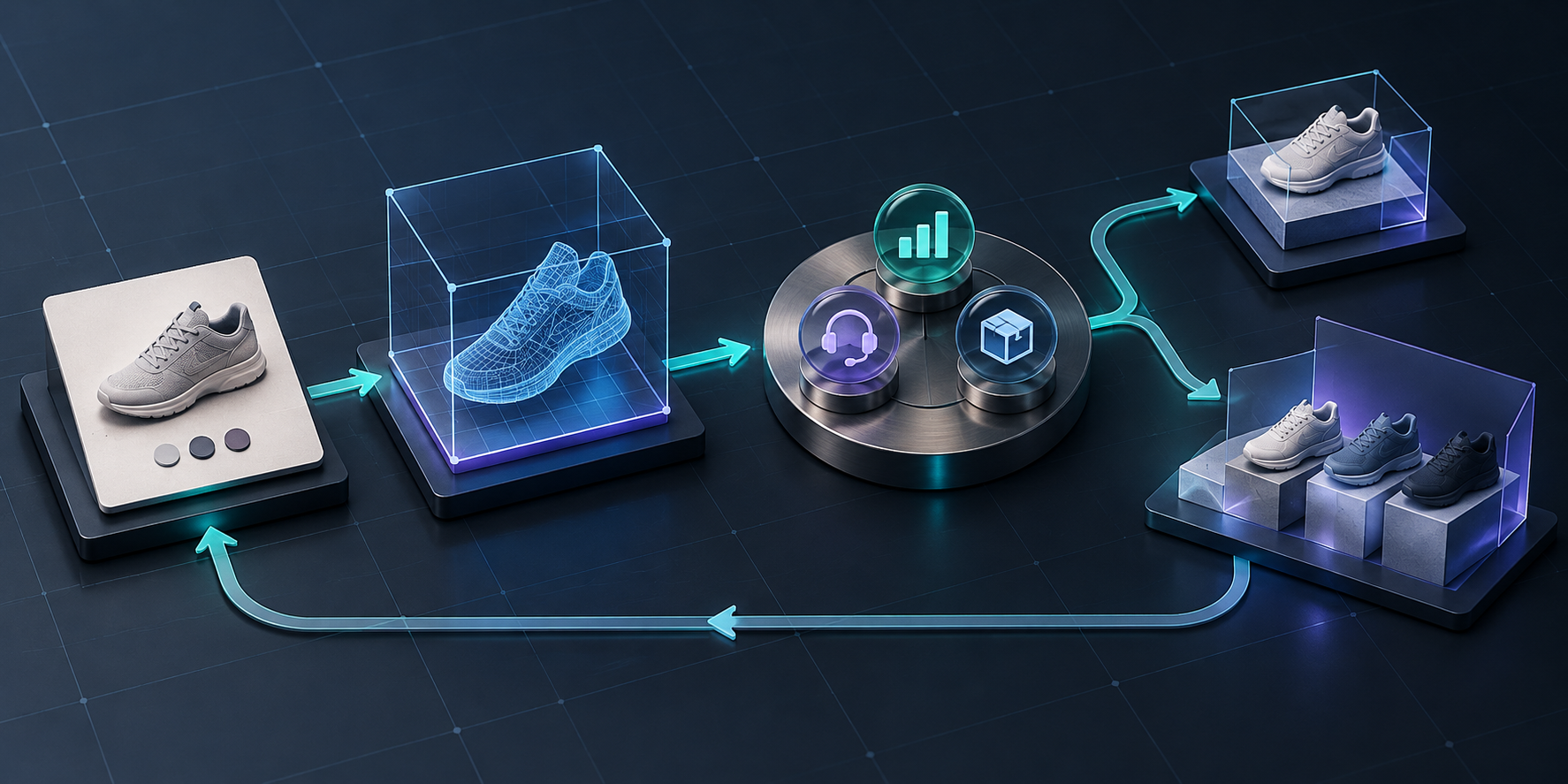
The decision matrix was simple. If the experience clarified the product and the workflow was repeatable, I would test a small group of similar items. If the model was attractive but did not add meaningful inspection value, I would keep the investment to a flagship or campaign page. And if capture quality was the blocker, I would improve the capture conditions before buying more tools or scanning more SKUs.
The Payback Is a Better Next Decision
The useful outcome of my pilot was not a dramatic claim about 3D commerce. It was a better answer to “what should we do next?” I now had a concrete product, a real capture workflow, a live shopper experience, and a short list of measurements instead of a vague media initiative.
If you want to run the same test, start with one product that benefits from being inspected from every angle. Install Supra 3D Capture from the Shopify App Store, capture the item with a regular phone, and judge the result on the product page—not in the editor. For a little extra context before you start, I also found it useful to revisit the idea of shipping the first 3D model as a product-page feature.
One clean pilot will not answer every question. It will give you the evidence to choose a sensible second one.