
How To Structure A Notion Database For A Clean Webflow CMS
If your Webflow CMS feels cluttered, the problem usually starts upstream: the way your content is modeled in Notion. In this guide, you'll learn exactly how to structure a Notion database so your Webflow Collections stay clean, scalable, and SEO-friendly—then connect everything in minutes with SyncFlow.
- Try SyncFlow: Write in Notion, publish in Webflow with auto-sync and auto-publish: Get started
- Watch the full setup tutorial: How to sync Notion with Webflow — Full Tutorial

Why database structure determines CMS cleanliness
A clean Webflow CMS is the outcome of a consistent schema. When your Notion database mirrors your Webflow Collection fields—names, types, and intent—SyncFlow can map and sync without hacks or manual fixes. The result: predictable pages, consistent styling, and instant updates when you edit in Notion.
The ideal Notion schema for a blog Collection
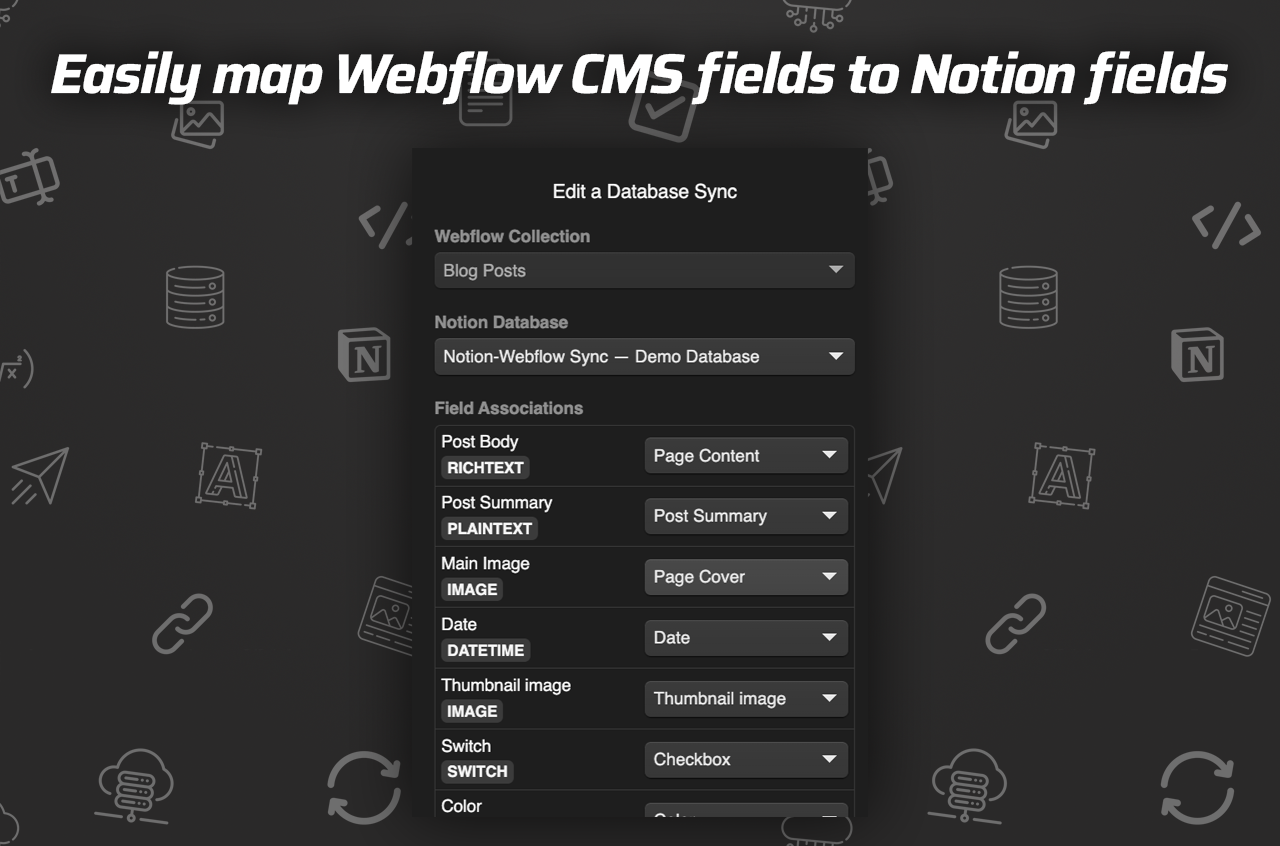
Create a Notion database named Blog Posts with these properties. The list maps neatly to common Webflow CMS fields and works perfectly with SyncFlow:
- Title (Title property)
- Slug (Text)
- Summary/Excerpt (Text)
- Body (Rich text)
- Hero Image (Files & media)
- Hero Alt Text (Text)
- Published At (Date)
- Author (Text)
- Tags (Multi-select)
- Category (Select)
- Featured? (Checkbox)
- Canonical URL (URL)
- Meta Title (Text)
- Meta Description (Text)
- OG Image (Files & media) [optional]
- Draft / Publish? (Checkbox or Select)
Modeling relationships without the mess
You can keep relationships simple and still map smoothly:
- Tags: Use a Multi-select in Notion and a plain text or multi-reference in Webflow. Keep tag names consistent.
- Category: Use a single Select for a primary category. If your Webflow model uses a reference, make the Notion value match the reference name.
- Author: Store the author name as text. If you have an Authors Collection in Webflow, keep the exact name for easy mapping.
- Internal links: When you link between pages in Notion, SyncFlow automatically converts these to internal post links on your site (Page Linking), preserving navigation.
Content formatting that survives the sync
- Headings: Use H2 and H3 for a clean table of contents and on-page SEO structure.
- Lists and callouts: Great for scannability; they render neatly.
- Images inside Body: Place images near the paragraph they support and include captions where relevant.
- Code and math: Enable code highlighting and TeX in SyncFlow if your content needs them.
SEO fields that actually move the needle
Use dedicated properties instead of burying SEO in your body text:
- Meta Title: Align with the page H1 but not necessarily identical; front-load the primary keyword.
- Meta Description: Summarize the unique value of the post in 150–160 characters.
- Slug: Keep short, descriptive, and stable over time.
- Hero Alt Text: Write for accessibility; describe what's visible and why it matters.
- Canonical URL: Add if you republish elsewhere to prevent duplicate content issues.
- Published At: Use the actual published date; keep it updated for major refreshes.
The SyncFlow setup: from Notion to Webflow in minutes
With the structure in place, connect your database using SyncFlow:
- Install
- Go to the site: syncflow.ybouane.com and click Get Started.
- Approve access to your Webflow sites and log in to SyncFlow.
- Map fields
- In the Webflow Designer, open the SyncFlow app and click Connect Notion.
- Select your Notion database, then choose the Webflow Collection to sync.
- Map properties 1:1 (Title → Name, Slug → Slug, Summary → Summary, Body → Rich text, Hero Image → Main Image, etc.).
- Sync and publish
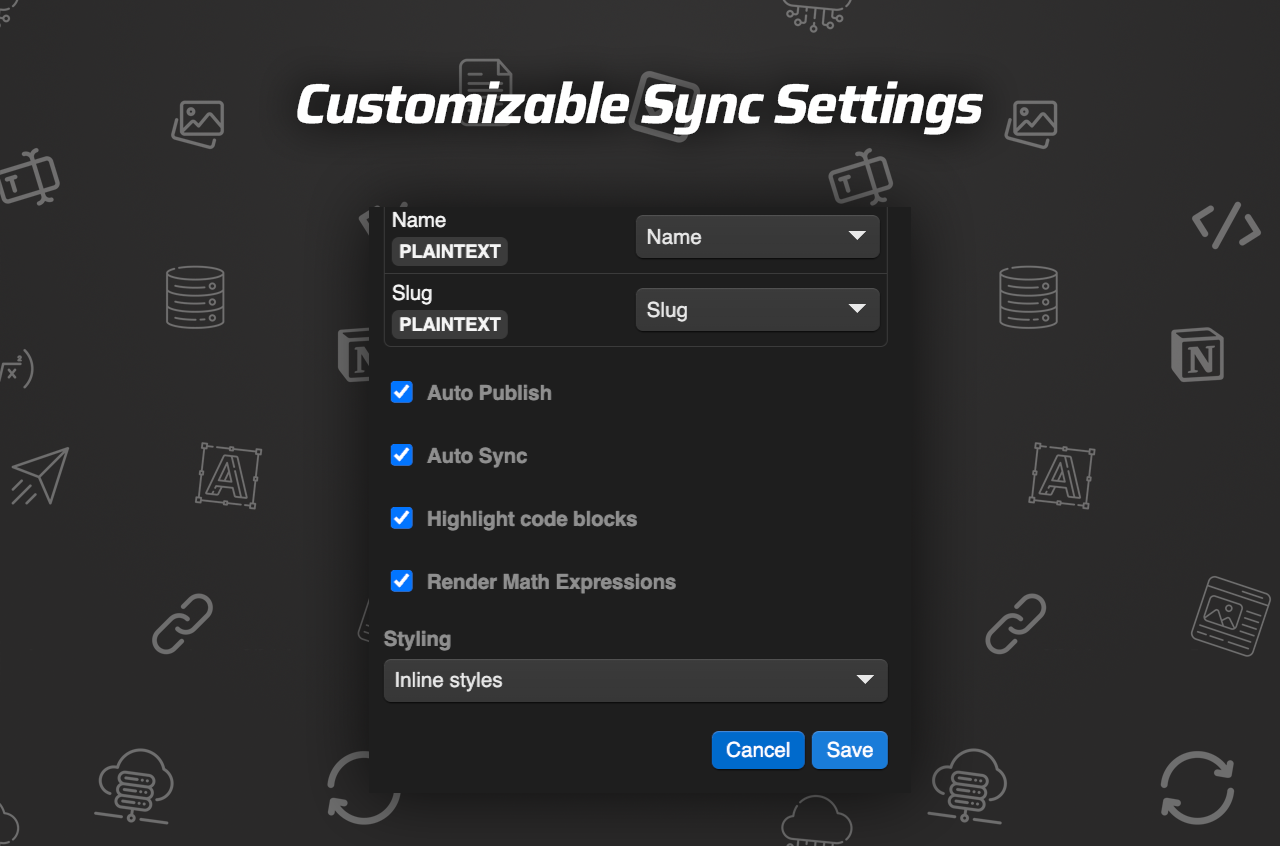
- Turn on Auto-Sync so changes in Notion update Webflow automatically.
- Enable Auto-Publish if you want updates to go live immediately.
- Optional: Toggle code highlighting and TeX rendering for technical or academic content.
Video resources:
- Full tutorial: How to sync Notion with Webflow — Full Tutorial
- Short trailer: SyncFlow — Notion-Webflow Sync
Common pitfalls (and quick fixes)
- Duplicate slugs: Enforce uniqueness in Notion. If two posts share a slug, only one can publish correctly.
- Missing alt text: Create a required text property for Hero Alt Text; your accessibility and SEO will thank you.
- Inconsistent tags: Standardize tag names (capitalization and plurals) to avoid creating accidental duplicates.
- Over-styled content: Prefer the Use Classes option in SyncFlow for full design control in Webflow; use Inline Styles sparingly.
- Image bloat: Compress hero images and keep gallery counts reasonable for fast LCP.
A reusable checklist for every post
Before you hit publish, confirm:
- Title written for humans with one clear promise
- Slug is unique, short, hyphenated
- Summary is 150–160 characters, benefit-driven
- Body uses H2/H3, lists, internal links
- Hero Image is high-res; Alt Text is descriptive
- Category and Tags follow your naming convention
- Meta Title and Meta Description are filled
- Published At set; Draft/Publish toggled
Build once, scale forever
A thoughtful Notion schema pays dividends: faster publishing, fewer CMS errors, and a better reader experience. Pair that foundation with SyncFlow to automate the busywork and keep your Webflow Collections pristine.
- Start syncing in minutes: Get started with SyncFlow
- Need a walkthrough? Watch the full tutorial and connect your first database today.