
How To Generate Long Form AI Videos With Consistent Characters
If you’ve tried to make long-form AI videos, you’ve probably hit the same wall: keeping characters and environments consistent from the first minute to the last. Faces drift, outfits change, and continuity unravels. Here’s the good news—there’s a reliable way to lock in character consistency while scaling to longer runtimes.
In this guide, you’ll learn a proven workflow for generating long-form AI videos with consistent characters using Scrptly’s AI Video Agent, complete with prompt frameworks, context image tips, API and N8N automation, and troubleshooting.
Why character consistency breaks—and how to fix it
Most text-to-video setups treat each scene as a separate request, so the model “forgets” small identity details over time. Scrptly solves this by orchestrating a swarm of specialized AI sub-agents—screenwriting, character design, narration, scene generation, and editing—that work against a shared brief. The secret weapon: context images and internally maintained design references that enforce continuity across scenes.
- Character and object consistency: Lock in faces, outfits, color palettes, props, and locations.
- Long-form strength: From 5–20 minute explainers to narrative shorts, the agent plans before it renders.
- Full-stack automation: Prompt in plain language, optionally attach reference images, and Scrptly outputs a final, edited video—no manual stitching.
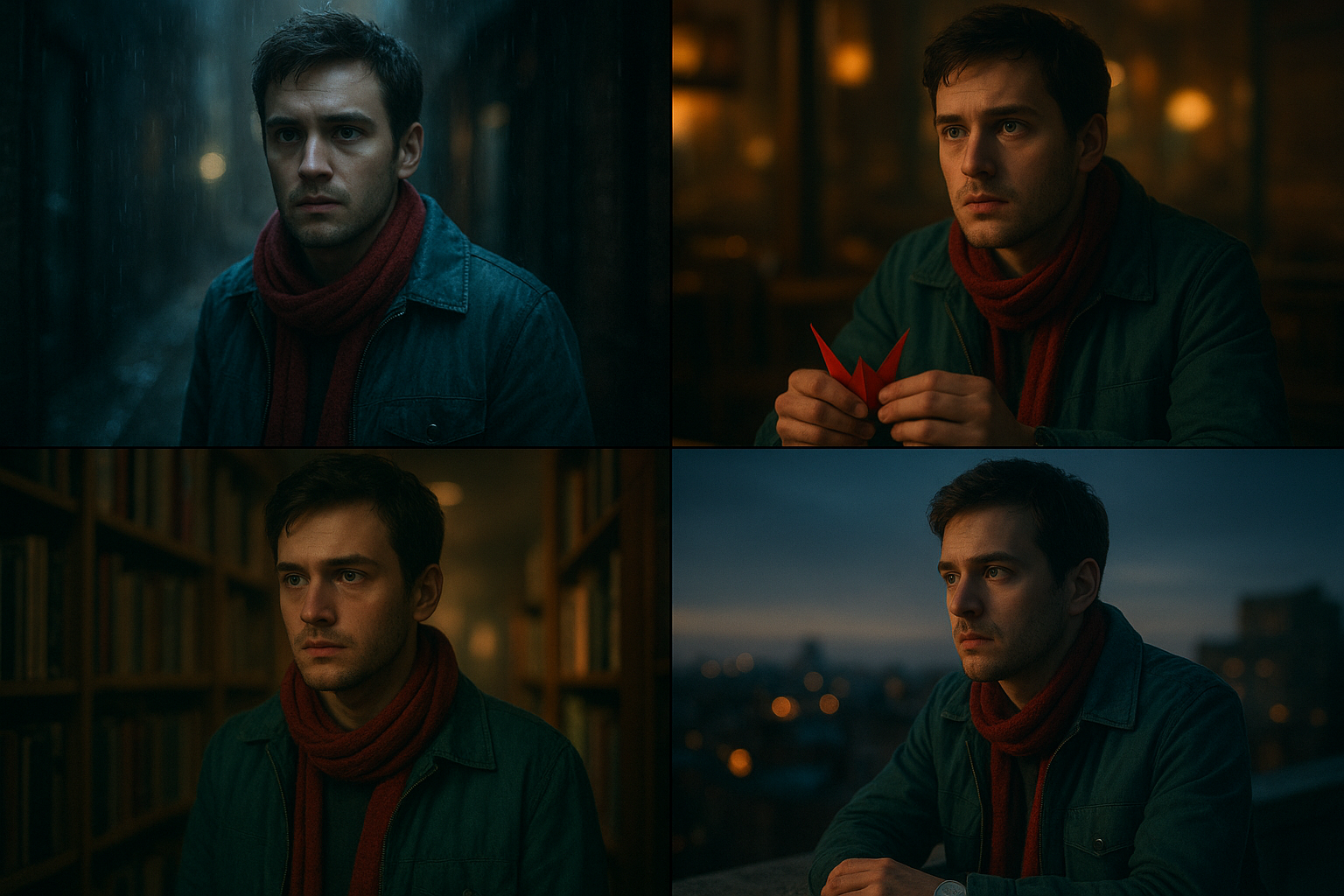
The consistency-first prompt framework
Use this structure to brief the AI Video Agent clearly:
- CAST: Names, ages, concise visual descriptors, signature wardrobe colors.
- WORLD: Key locations and recurring props.
- ARC: Beginning–middle–end beats (or module list for educational content).
- STYLE: Cinematic references (lighting, pacing, lens feel), portrait/landscape.
- VOICE: Narration tone, language, target audience.
- LENGTH: Target runtime, scene count.
- DO-NOT-CHANGE: Traits that must never drift (hair, outfit, prop, logo placement, accent).
Example (long-form, 8–10 minutes):
"Create a 9-minute documentary-style video in landscape 16:9. CAST: Protagonist is Mira, late 20s, East Asian, short black bob, teal windbreaker, red scarf, silver digital watch. WORLD: Urban night market, rooftop garden, quiet library; recurring prop is a red paper crane. ARC: 1) Cold open in the night market, 2) Research montage in library, 3) Test on the rooftop garden, 4) Reflection. STYLE: Handheld documentary feel, soft tungsten and neon mix, occasional macro cutaways, cinematic color grade with teal-and-amber. VOICE: Warm, curious narrator. LENGTH: ~9 minutes, 12–16 scenes. DO-NOT-CHANGE: Mira’s face, hair, teal jacket, red scarf, watch, paper crane motif."
Tip: Reuse the exact character names and “DO-NOT-CHANGE” section across future prompts if you’re building a series.
Context images: your consistency superpower
To anchor identity, upload:
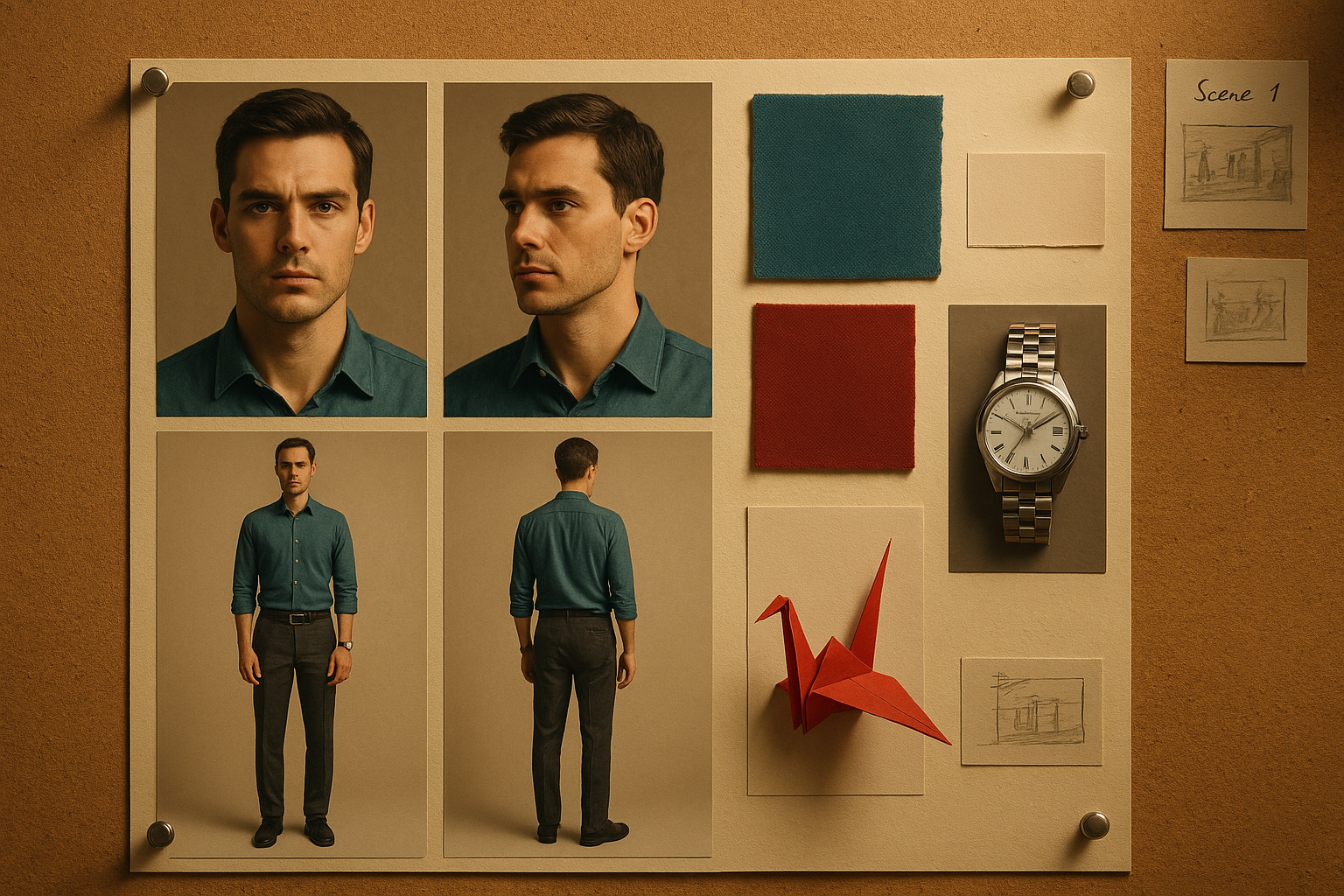
- Character headshots: neutral lighting, front and 3/4 angles, consistent wardrobe pieces.
- Pose/attitude images: walking, thinking, smiling (to stabilize expression across scenes).
- Environment plates: signature backdrops (market, studio, office) to maintain set design.
- Prop close-ups: anything iconic (watch, product, notebook) that must recur.
When you run the prompt in Scrptly, add these as context images. The agent will propagate them through character design and scene generation so your protagonist doesn’t “drift.”
Step-by-step: generate a long-form video in Scrptly
- Describe the video in detail: Use the framework above in the Prompt field.
- Attach context images: Headshots, outfits, environments, props.
- Set format: Portrait for Reels/TikTok, landscape for YouTube; specify duration.
- Style directives: Camera language, lighting, pacing, color motifs.
- Submit: Scrptly’s sub-agents write, design, generate scenes, narrate, and edit into a final deliverable.
Advanced: programmatic long-form with the API
Developers can automate consistent series with the Scrptly Video Development Kit and AI Video-Agent API.
import Scrptly from 'scrptly';


Scrptly.setApiSettings({

  apiKey: process.env.SCRPTLY_API_KEY,

});


const prompt = `Create a 10-minute educational video about urban farming.

CAST: Host is Amir, 30s, tight curls, olive jacket, mustard beanie. DO-NOT-CHANGE: Face, curls, jacket color, beanie.

WORLD: Rooftop garden, community center, night market.

STYLE: Documentary handheld, macro plant cutaways, warm natural light.

VOICE: Friendly, confident.

LENGTH: ~10 minutes, 14–18 scenes.`;


const contextImages = [

  // URLs or file references to headshots, outfits, environments, props

];


(async () => {

  const task = await Scrptly.VideoAgent.create({

    prompt,

    contextImages,

    aspectRatio: '16:9',

    approveUpTo: 10000, // token budget cap

    waitForCompletion: true,

  });


  console.log('Final video URL:', task.output?.videoUrl);

})();
Note: Check Scrptly’s docs for the latest method names and options. Start here: https://scrptly.com/
Automate publishing with N8N
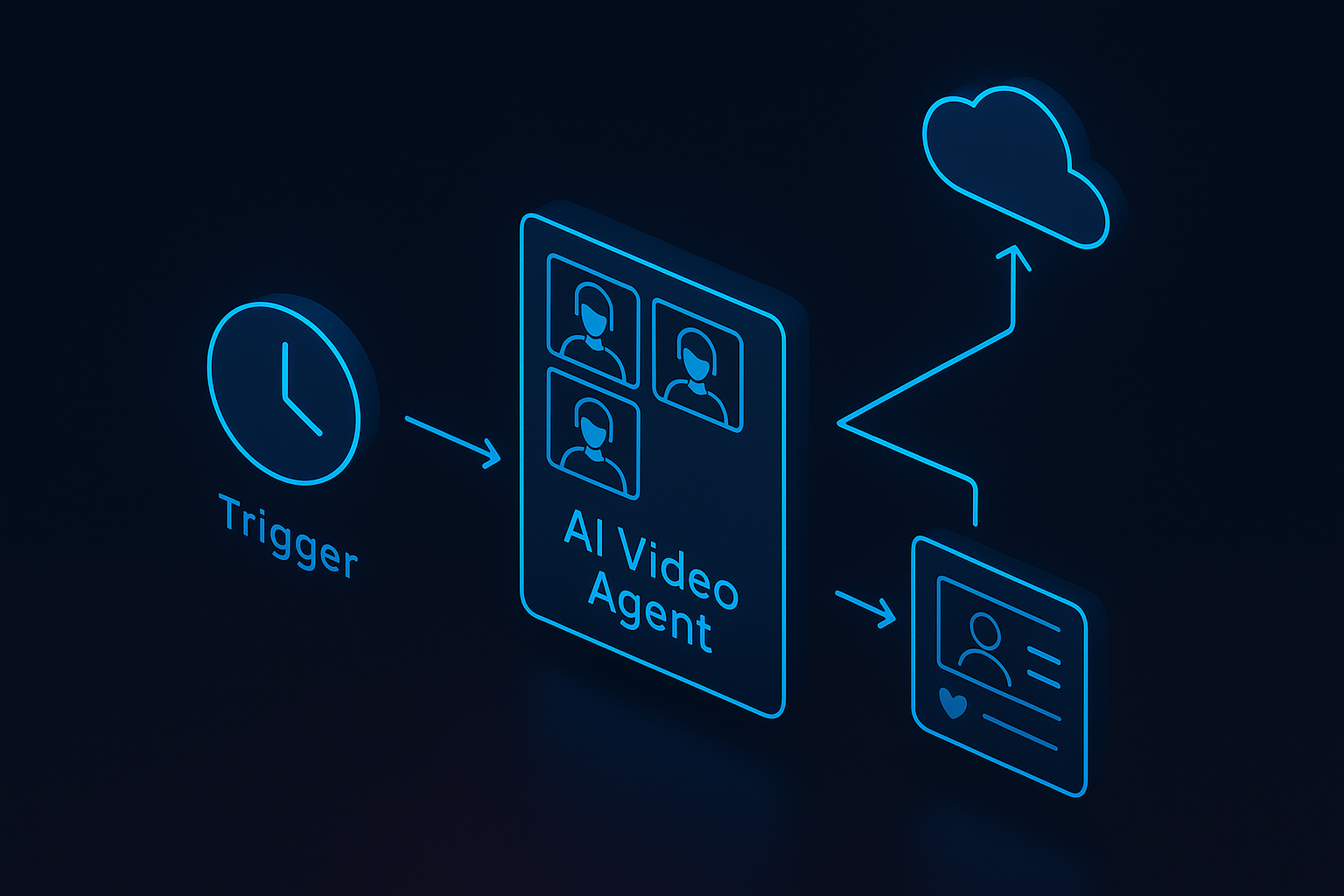
Use the Scrptly N8N node to schedule or trigger long-form generation and distribution.
- Install: Settings → Community Nodes → Install New → n8n-nodes-scrptly
- Add credentials: Paste your Scrptly API key.
- Configure the node:
- Post-process: Chain nodes to upload to storage, email to reviewers, or publish to YouTube.
Docs/source for the node: https://github.com/ybouane/n8n-nodes-scrptly
Best practices to keep characters locked
- Name your cast: Use exact names (Mira, Amir) and repeat them per scene to prevent swaps.
- Color-code wardrobe: “Teal jacket + red scarf” is easier to preserve than vague descriptions.
- Pin signature props: “Silver digital watch on left wrist,” “red paper crane in pocket.”
- Enforce DO-NOT-CHANGE: Hair length, eye color, accessories, accent, outfit core pieces.
- Reuse context images: Start each new episode with the same headshots and outfit refs.
- Motifs and catchphrases: Recurring visual or verbal motifs help the agent’s internal checks.
- Scene labels: When possible, nudge continuity—“Mira keeps the same scarf from Scene 1.”
- Environment anchors: Reuse key locations to stabilize background style.
Troubleshooting drift (and how Scrptly helps)
- Face looks different mid-video: Add more varied headshots (front, 3/4, profile) and reinforce DO-NOT-CHANGE.
- Outfit morphs: Provide close-ups of the jacket/scarf and mention them in 3–4 scene beats.
- Lighting breaks tone: Add a style line per location (e.g., “neon rim light at the market, warm tungsten in library”).
- Prop disappears: Mention the prop in the arc and close with a callback (“Mira folds the red crane in the final scene”).
Who benefits most from consistency-first long-form
- Ecommerce and agencies: Series of product showcases and UGC ads with the same on-screen persona.
- Entertainment creators: Episodic shorts, anime-style arcs, ongoing characters.
- Educators and communicators: Multi-lesson courses, explainers, and mini-docs with a consistent host.
- Developers and automation teams: Scalable video pipelines via API, MCP, and N8N.
Ready to build your long-form series?
Scrptly’s AI Video Agent was engineered for longer narratives and educational formats where character and environment consistency matters. Provide a great prompt, add context images, and let the sub-agents handle script, visuals, narration, and editing—end-to-end.
- Generate your first long-form video: https://scrptly.com/
- Automate with N8N: https://github.com/ybouane/n8n-nodes-scrptly
- Explore the developer platform and API on the Scrptly site
Create once, stay consistent, and scale your channel or brand with confidence.